
Founded in 2010, Endurance Estates focuses on strategic land promotion and helps landowners navigate the complex planning system to unlock the value of their land. As a result of our extensive experience and skillset, we pride ourselves in being able to 'add value' to strategic land assets by creating serviced land parcels.
With offices in Cambridge, London and Birmingham, Endurance Estates is well-placed to identify and act on opportunities across the Eastern and Southern regions. Being embedded in one of the most economically vibrant parts of the country, Endurance Estates is the 'go to' partner in the region for land promotion.






Endurance has completed the sale of the final phases of residential development at Parsonage Road, Takeley, Essex to Hill Residential.

A group of 12 walkers from Cambridgeshire and the Eastern region led by Tim Holmes of Endurance Estates completed a challenging 120km walk from Sosian Ranch in the Laikipia area of Kenya to Borana Ranch.

Endurance were thrilled to support the Cambridgeshire & Peterborough Combined Authority and Huntingdonshire District Council with their Battery & Future Fuels Day Conference: Unlocking the Region's Potential as a Leader in the Clean Energy Sector.
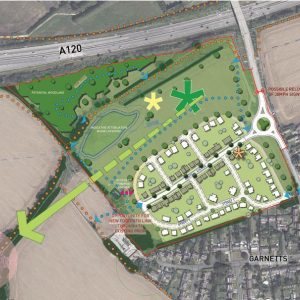
Endurance has completed a sale of land with planning permission for 155 new homes to Bellway Homes Limited. The first phase of the development was sold to Stonebond in 2023 and is now substantially built out. Phase 3 is in the process of being sold.

Local Centre plans were passed at Planning Committee in January and provide for a Co-op, four further retail units, a cafe / wine bar, new Community Centre, children's day nursery, forty-nine Later Living apartments and enhancements to the public realm.

Endurance has signed a new promotion agreement with landowners on land suitable for residential uses in Horsford, Norfolk. Following a successful public consultation event we are working in collaboration with the Parish Council on a Neighbourhood Plan allocation.
Endurance Estates have over 25 years of experience in predicting and handling the issues and obstacles that may arise in the process of delivering a successful project and perseveres in all aspects of the property process.
The “Endurance” name was inspired by Shackleton’s 1914 – 1917 Antarctic expedition on the ship “Endurance”. A family member of one of the company shareholders participated in this expedition which has subsequently been seen as one of history’s greatest feats of endurance.
As a property company the Endurance theme provides the backbone to the company’s approach. Considering property is akin to looking at an iceberg in that you cannot always immediately be aware of the hidden issues beneath the surface which can affect its performance.